 Luna
Luna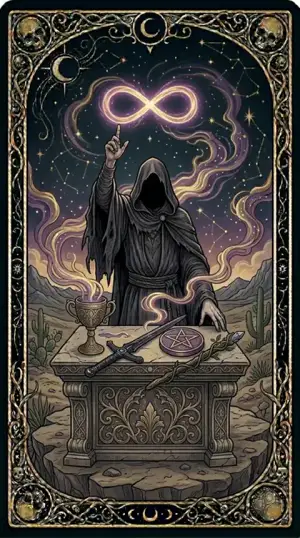
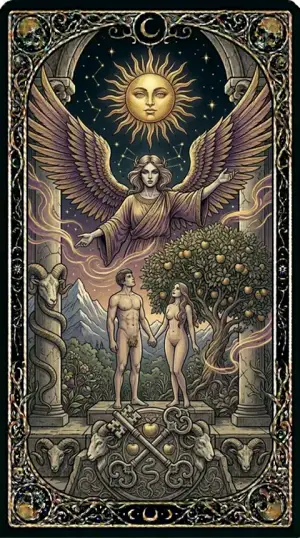
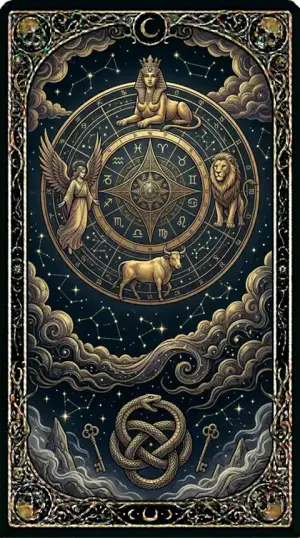
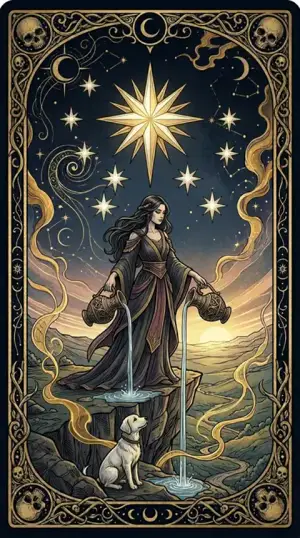
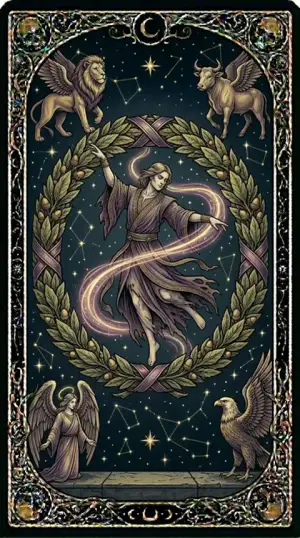
The Major Arcana: 22 cards
The grand name came late. In the game the deck was made for, these 22 stood outside the four suits and outranked them - that is the whole reason they were ever grouped together. “Arcana” is simply the Latin word for hidden things, borrowed by occult writers centuries afterwards and glued onto a pile of cards that already existed.
The grouping survived because it is structural rather than decorative: those 22 are the only cards in the pack belonging to no suit, and they carry the large themes - choice, turning point, maturity, renewal. The destiny matrix numbers the same 22, so an arcana learned there is recognisable here.
Three spreads that actually matter
| Spread | Cards | When it fits |
|---|---|---|
| Card of the day | 1 | tuning into the day, a short morning hint |
| Three cards | 3 | a specific question: past → present → future |
| Celtic Cross | 10 | a tangled situation where causes and influences matter |
How a three-card spread is read
A card behaves less like a noun than like an adjective: on its own it describes nothing in particular, and the position hands it something to describe. Past, present, what comes next - three slots, each with its question already written into it, and the card that lands there is answering that question rather than reciting a fixed meaning.
This is why the same card differs between a question about work and a question about love, and why looking the three up separately produces three sentences about nothing. They are read together and from the question.
The Celtic Cross: ten positions
Six cards make a cross around the question - the heart of it, what crosses it, the root, the recent past, the near future, the conscious aim - and four more stand to the right as a staff: the person, their surroundings, hopes and fears, the outcome. The version English readers use descends from A. E. Waite's 1911 description of the layout, which is also where the name comes from.
Ten cards, though, are not ten predictions. Hopes and fears is the position to handle gently, since the same card can be the thing someone longs for and the thing they dread; it is read leaning on the other nine.
How to phrase the question
“When will he text me” asks about another person's next move, and the deck has nothing to say about it. “What am I actually waiting for” asks about the one holding the cards, and every image suddenly has something to attach to. The question decides how much the cards are allowed to be about.
Dates behave the same way. A spread describes the shape of a situation rather than a calendar, and asking it for a date is asking a map about the weather.
Difficult cards are not a verdict
The frightening reputations belong to the old names and the old pictures, not to what these cards do in a reading. The thirteenth is a cycle closing and beginning again; the sixteenth, a structure that stopped holding coming down and clearing the ground; the eighteenth, fog and intuition - a stretch where not everything is visible yet.
None of that is a fate being handed out. The names came first and the readings grew up around them; what a spread finally offers is a list of things worth taking into account, and the deciding stays exactly where it was.
Frequently asked questions
How does the card of the day differ from the arcana of the day in the matrix?
One is arithmetic, the other is a draw. The arcana of the day is worked out from a birth date and the calendar date, so it never varies for that pair. The card of the day comes off a shuffled deck and holds until tomorrow. Different sources, so they are under no obligation to agree.
Can I do a spread on the same question several times?
Rarely worth it. A second spread usually means the first answer was unwelcome, and shuffling again does not add information - it only widens the pool until something more agreeable turns up. Changing the wording achieves what changing the cards cannot.
Are reversed cards necessary?
Not necessarily. A good deal of the tradition reads upright positions only and takes the shading from the position and the neighbouring cards. That is how the app works: every card lands upright.
Does tarot predict the future?
No, and the layout itself says so. The last position answers a conditional - where this goes if nobody moves - rather than the question “what will happen”. Change the decisions and you change what they were heading towards.
Where can I do a reading?
In the Luna app. The card of the day is free there; the three-card spread and the Celtic Cross belong to premium. Luna reads what falls as an answer to the question that was asked, and speaks it aloud.
The content is for entertainment and self-reflection. It is not a substitute for professional advice.
Do a reading
Not a picture generator with a caption underneath. The app shuffles a whole deck, deals the cards one at a time, and Luna reads what fell as a single answer to the question you actually asked, aloud.
Open Luna